How are we to live before a holy God?

Run.png

Sources: Table Talk Magazine, Ligonier.org, Grace to you

Today’s devotional focuses on John 15:6.

John 15:6 “If anyone does not abide in me he is thrown away like a branch and withers; and the branches are gathered, thrown into the fire, and burned.

What does this mean? Can one lose their salvation if there is enough sin in their life? How are we to live before a holy God and how can we know that we are surely saved? What are the marks of a Christian? These are all good questions. Questions that I once had when I was beginning my spiritual walk.

Can one lose their salvation?

The short answer is no. If one is a child of God, he will always be saved. John 3:16, and Romans 10:9 emphasize belief and salvation. However, Mark 1:15 and others stress the importance of belief accompanied by repentance.

John 3:16

16 For God so loved the world that he gave his one and only Son, that whoever believes in him shall not perish but have eternal life.

Romans 10:9

If you declare with your mouth, “Jesus is Lord,” and believe in your heart that God raised him from the dead, you will be saved.

Mark 1:15

15 “The time has come,” he said. “The kingdom of God has come near. Repent and believe the good news!”

Maybe you believe you are saved but are in a season of sin. If this is you, you need to repent and live out your identity in Christ. Pray, cut off sin, renew your mind, and put on Christ. Our love for God is evidenced by obeying His commands. And it cyclical. Loving God yields obedience which produces fruit and the unique joy of doing what we are called to do from a transformed heart.

Test Yourselves

2 Corinthians 13:5

Examine yourselves to see whether you are in the faith; test yourselves. Do you not realize that Christ Jesus is in you—unless, of course, you fail the test?

Do you have spiritual fruit? Love, joy, peace, kindness,  gentleness, self control? This doesn’t mean that you need all of these to be saved. However, Christians should be producing fruit and growing in the faith. As we live out the commands of God Coram Deo, the Spirit testifies that we are in the faith.

The Spirit gives us assurance of salvation

1 John 3:23

23 And this is his command: to believe in the name of his Son, Jesus Christ, and to love one another as he commanded us. 24 The one who keeps God’s commands lives in him, and he in them. And this is how we know that he lives in us: We know it by the Spirit he gave us.

Romans 8:16

16 The Spirit himself testifies with our spirit that we are God’s children.

But what does it mean to live Coram Deo? It means that we are living day to day in the face of God. We are always aware of his presence, acting with integrity; consistency in all situations. Whether people are watching us, or not watching us, we are the same person. We have a conviction that God is always watching (Psalm:139). He is omnipresent, being everywhere. We do things unto the Lord, for His glory, with the right heart motivation. With a vantage point toward eternity. It’s a life lived with established conviction, founded and held captive by the Word of God.

What can we gather from all of this? Believers can’t lose their salvation. As we produce fruit enabled by the spirit, the spirit will testify to our assurance of salvation as evidence of our faith. Our love for God propels us toward obedience. We live out this life Coram Deo. Before the face of God, with integrity in all situations. As we live Coram Deo, we will be authenticating the message that saved us in the first place. The Gospel that transforms lives. The Gospel that transformed our heart and enables us to be a salt and light in the world.
 

What does it mean to fear God?

Fear God

Sources: Faith life Study Bible (FSB)/Logos Bible Software

What does it mean to Fear God? When I began  my journey, I was so confused about this term. It seemed like everyone said I fear the Lord. I once met a man who was involved In sexual immorality. And he said he feared the Lord. You’ve probably hear that it means awe or reverence but what exactly does this mean and what’s the implication on our lives of fearing the Lord?

As outlined in the FSB, here is what it means to fear the Lord rearranged in a more understandable way:

What is fearing the Lord a Response to?

  1. It’s a response to his holiness; people fear God because of his mighty deed. Israel responded to God’s saving power with fear (Exodus 14:30-31

What does someone do who fears the Lord?

1)Exhibit trust and obedience by fearing him. (Deut 5:29, 8:6, 10:12-13) Obedience to the Law teach people to fear him. Abraham sacrificed Isaac because he feared Him.

2) Loyalty and Faithfulness to the covenantal God and God alone. No idols, no Baal, no other Gods. (Josh 24:14-15)

3) Trust in God (Pss. 115:11)

Who are the people who fear the Lord?

Community of those faithful to him.

4) IT’s the beginning of Wisdom and Knowledge (Prov 1:7,9:10) (Pss. 111:10)

5) Attitude of Humility resulting in righteous living (Prov. 3:7, 8:13, 14:2, 16:6, 22:4)

6) Worship and praise are equated with fear of the Lord. (Pss. 5:7, 22:23)

Fearing God in Ecclesiastes:

The exhortation to Fear God and Keep His commandments- (Eccl. 12:13)

God acts so that People will fear Him (Eccl 3:14)

Fearing God in relation to Israel:

The Israelites forsook the fear of the Lord; The prophets speak of a restoration of fearing the Lord when they are restored.

Fearing God in the book of Job:

(Job 1:9)

The central question in Job asked by Satan

What are the implications of fearing God?

  1. Protection, Wisdom, Blessing

It seems that Fearing God really is the result of being a Christian. True Christians fear the Lord and pursue wisdom and righteous living. It’s a response to his holiness. As Christians, we strive to reflect His attributes and conform more to Christ every day. We respond to His holiness by pursuing holiness. Pursuing holiness is pursuing Christ. Christ lives in us and the Spirit works in us. As we develop a healthy fear of God, we conform more to Christ for His glory. We glorify God by reflecting His attributes. As we reflect His attributes, we authenticate our Christian identity as proof of the Spirit working within us. This isn’t a legalistic authentication but a result of the saving power of the Spirit in us already. We fear the Lord and keep His commandments. It’s out of a love for him and what he did on the cross that’s motivates us to live out the Christian life and stay in constant fellowship with him. It’a all by grace through faith that it’s even possible. Enjoy the blessings that come from fearing the Lord. You will be blessed.


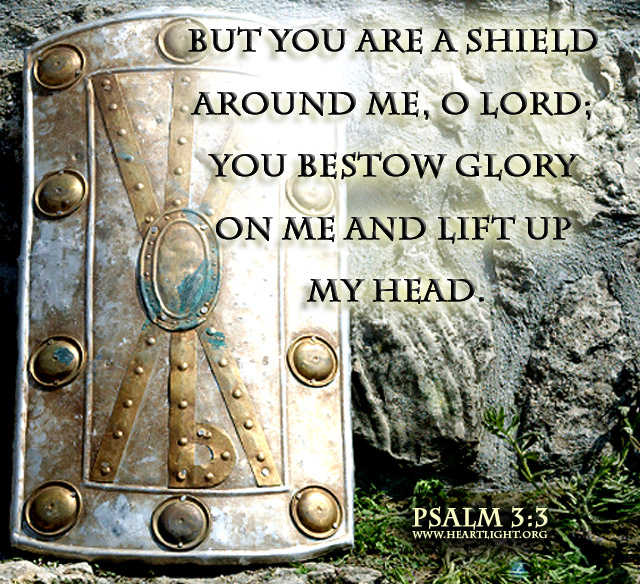
Psalm 3

psalm3_3b

Where do we turn in times of distress? The first of David’s Psalms and the first Lament Psalm is right here is Psalm 3:3. Lament Psalms express deep sorrow and ask for God’s blessing or Intervention. In Psalm 3, David is experiencing trials. A whole nation is turning against him. How does David respond in this trying Psalm

With Confidence

In Psalm 3:5, David lays down and sleeps. His confidence in God is validated by him sleeping in the midst of this dangerous situation.

Doxological petition

David turns to God with a petition and a praise. He pleas for God to save him but also praises Him in Psalm 3:8. Salvation belongs to the Lord. Deliverance belongs to the Lord whether it be from temporal enemies or the Spiritual Salvation of the soul that only the Lord can bring.

Where do you turn in times of distress? Can we have the confidence of David through our trials to turn to God and have confidence in our prayers from an all powerful God? Salvation Belongs to the lord

.

Psalm 2

kisstheson

         Credit: Coye Still Southern Seminary; Logos Bible Software

Psalm 2 introduces the Book of Psalms along with Psalm 1. While Psalm 1 is more focused on the individual, Psalm 2 addresses the nations. The scope has broadened. It starts with the rage of the nations and ends with the kingship of Christ. There are 2 options, 2 paths for the nations to take. They can either give allegiance and “Kiss the Son” or perish. The choice is theirs.

God has a plan. And it’s not always your plan. Even now, I’m guilty of trying to plan the course of my life, where I will go, and what I want to do. Planning is good. It demonstrates discipline, goals, and determination. The tenacity to succeed. However, the fruition of those plans is ultimately determined by a providential, sovereign God. What does this have to do with Psalm 2? At the beginning of the Psalm, the Nations start out rebelling; plotting in vain.

Do the nations really rebel? Coye still said that history is a story of humanity warring against God. Humanity wars against God. Humanity killed Christ. But it was necessary for the atonement. Necessary for justification of the elect. Without it, there is no Sacrifice for sins. If Jesus wasn’t God, Christianity itself would cease to exist. A sacrifice was necessary; the one and only sacrifice that didn’t need to be repeated. No more sacrificing animals over and over again in the OT. This sacrifice was special; good enough for all of humanity if they believe in Christ, repent, turn to him and have faith.

When the nations plot in Psalm 2:1, the result is laughter. Psalm 2:4-“He who sits in the heavens shall laugh.” Rebellion is a reality but also vanity. We can plot all we want but ultimately, God is in control. He is sovereign. When we can trust in the promises of God, we are relaxed and have peace because there is a plan. We are submitting to a father, even though our desires may be contrary to his will. And in all of this we can have joy through various trials as it says in James. Trials produce Character and conform us to Christ.

Romans 8:28-29

“And we know that all things work together for good to those who love God, to those who are called according to His purpose. For Whom He foreknew, He also predestined to be conformed to the image of His Son.”

Everything works together and He has a purpose. And we are being conformed to the image of His Son.

Psalm 2 is also about the global kingship of Christ. Quoted 3 times in the NT (Act and twice in Hebrews), Psalm 2:7 says ” ‘I will declare the decree: The Lord has said to Me, You are My Son, Today I have begotten You.” Psalm 2:7 is a reference to the Father/Son relationship of the trinity. The messiah will be established as king despite the Gentile Nation’s resistance. The message is clear. Kiss the Son or perish.

As we we go about life, we may not understand God’s purpose. It can be confusing. It may be not what we want. But we can trust the Lord and believe in the promises of our Sovereign God. Psalm 2:12- “Blessed are those who put their trust in Him.”


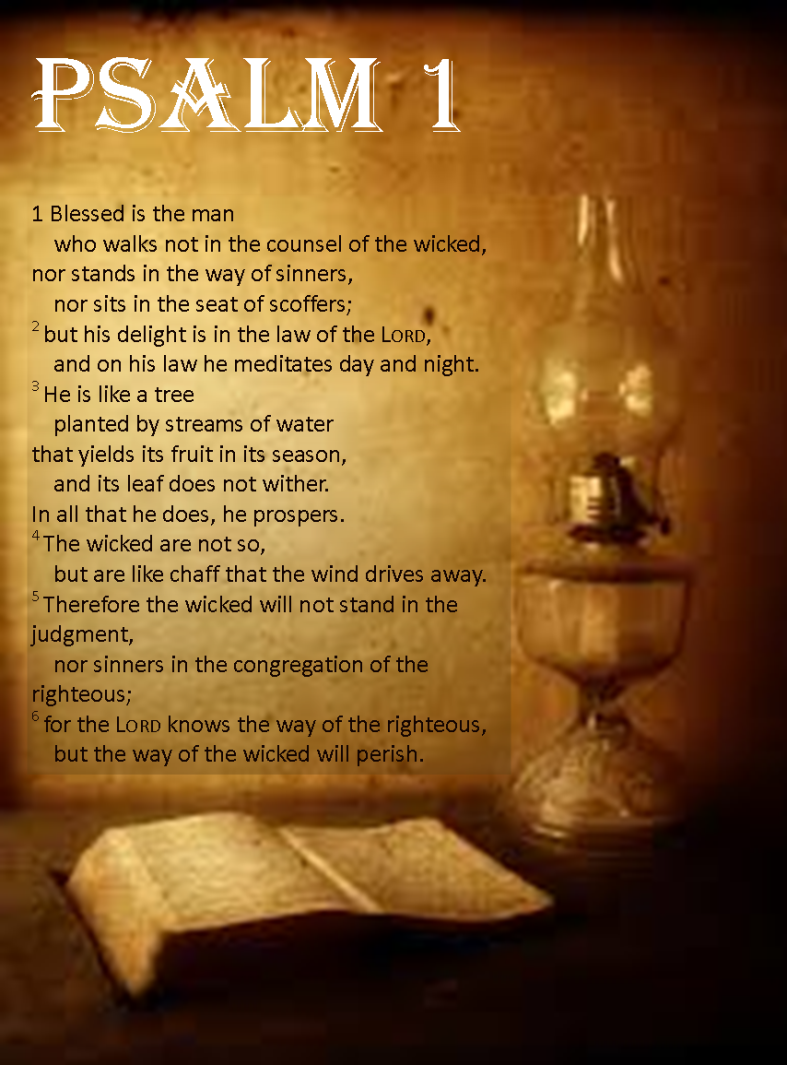
Psalm 1


Psalm 1.png

How  can we be happy? Isn’t this the pervading question of the culture. Everyone tries to pursue happiness. I can remember my first Christmas. The beaming sun was just coming up over the horizon. The radiating beams of light penetrated the thick, glassy windows. Ho! ho! ho! He’s here! I jumped out of my bed and ran down stairs; I suspected there was a treasure or something down there. Something good. I remember asking for pokemon cards. To my surprise, there were tons of presents! Rushing in anticipation, I opened every single one of them. Paper scattered everywhere in a hurry. The unveiling of what I had received was finally here. It was……..Monopoly. I had never played monopoly and was frankly pretty bummed out. I mean isn’t monopoly for the older kids? My point is that our happiness can come and fade. Sometimes it’s based on what we receive. Sometimes it’s based on our circumstances. But true happiness is found in the Lord and the word of God.

Psalm 1 is the first book of Psalms; Pslams is divided into 5 “books” although the book of Psalms is considered one book of the Bible. Psalm 1 is important. Chronologically speaking, Psalm 1 was not the first Psalm written; it was intentionally placed there. So we what can we learn about Psalm 1 and the truths presented? It is important! We can learn about happiness, our way of life, and the outcome of our way of life.

True Happiness

Psalm 1 starts with the word blessed. The Hebrew is Ashre meaning joy, contentment, happiness. I believe reading somewhere that the term is doubled. The Psalm starts out Ashre, Ashre. Doubly blessed. So how can we be happy in this life? The Psalm goes on to list three negatives and one verb of commission.

The three negatives

The three negatives outline what the Blessed man should not do. He should not

  1. Walk in the counsel of the Wicked
  2. Stand in the way of Sinners
  3. Sit in the seat of Scoffer

There is a progression of evil here; gradations of evil. Walking is not as bad as standing.  Standing is not as bad as sitting with scoffers.

You are a relationship manager

What are the implications from this passage? I believe our closest friends should be those that can help us conform to Christ’s image in deed and thought. People that spur us on to holiness which is essentially pursuing the Person of Christ. Christ in us. We are all busy. I’m not saying that we should avoid the world. We are called to engage the world with the Gospel. And show love to them. But our fellowship with others that are pursuing Christ is our choice. We can only be super close with a limited number of people. And we have to make decisions on who we want to spend a lot of our time with. As steer our ship in the waves of life, we need to make informed decisions on who our friends are. Our relationships are part of communing with Christ along with the Word and prayer. Pursuing the right friends is a blessing and you will be thankful

What does the Blessed man do?

The blessed man delights in the Law of the Lord. And this makes sense. God has a plan for us. He has a plan for you. He has a plan for me. As we read the Word of God, we are expressing our union with Christ by communing with Christ. Fellowshipping  with him. Getting direction for his heart, his purposes, and how we should live.

How is the Blessed person described?

The blessed man is described like a tree yielding fruit. They are stable, nourished, prosperous, fruitful. They are productive, spiritually maturing and conforming to Christ. He has Union with Christ. He is communing with Christ. And the fruits of the Spirit are evidently displayed in his life by producing the fruit of the Spirit.

2 paths

The wicked are described as the opposite of the blessed man. “The wicked are not so.” They are chaff. We can either follow the way of the wicked or the way of the righteous. Follow Christ or not follow Christ.

2 outcomes

The Lord knows the way of the righteous. He has saved them. They are going to Heaven. The Lord also knows the way of the wicked. They will perish.

Implication

We really can be happy by delighting in the Law of the Lord. The Gospel is the power of salvation to whoever believes accompanied by faith and repentance. It is the happy man that love the Word of God. In fact, it is the mark of a true believer. As we Abide in Christ and follow His Word, we can be happy. Following the way of life God has planned for us, following his purposes for His Glory.